
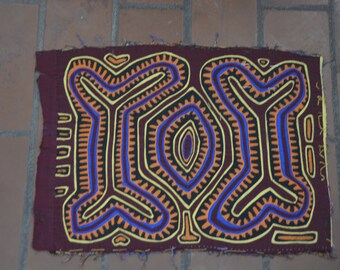
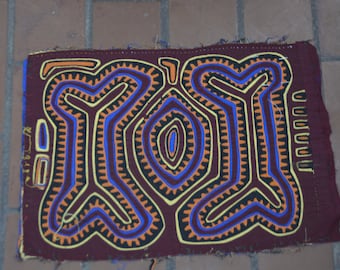
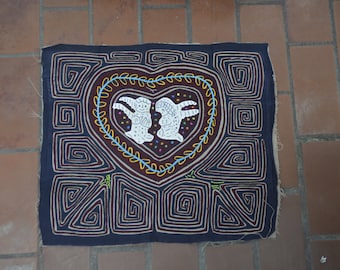
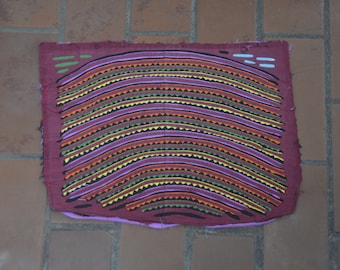
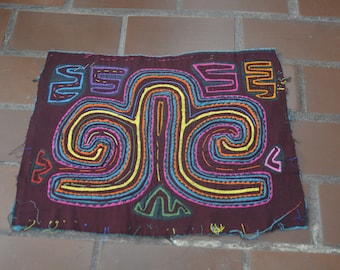
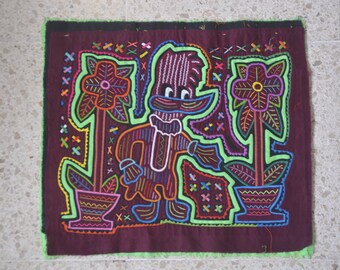
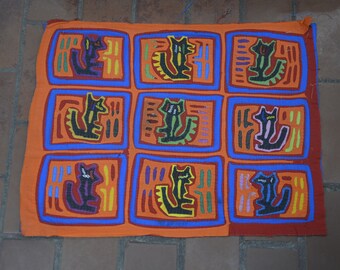
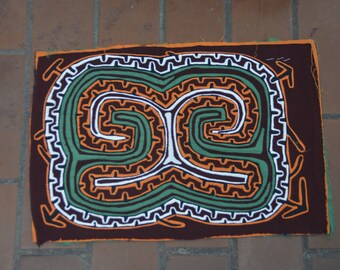
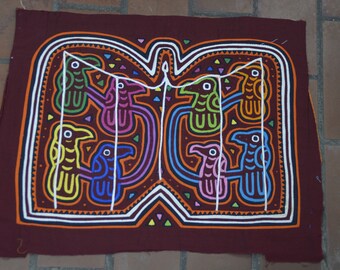
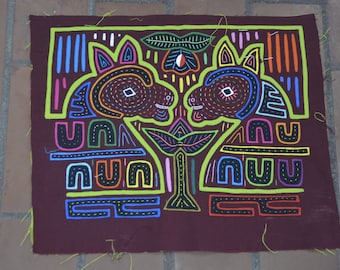
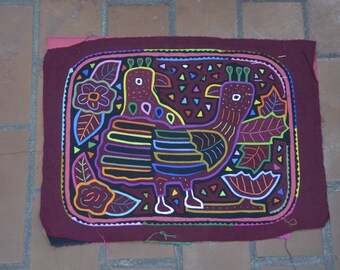
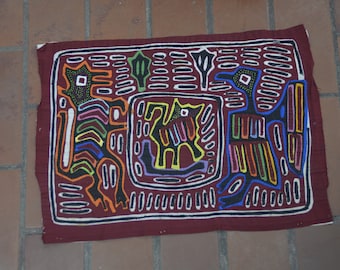
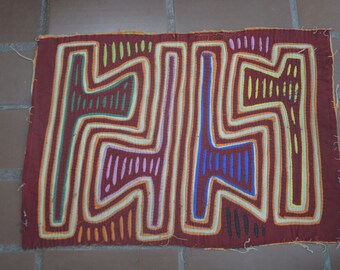
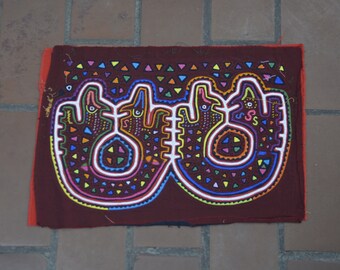
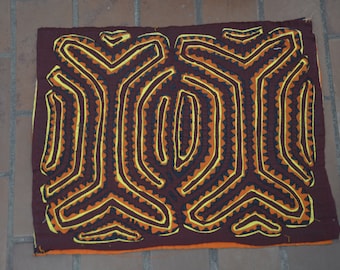
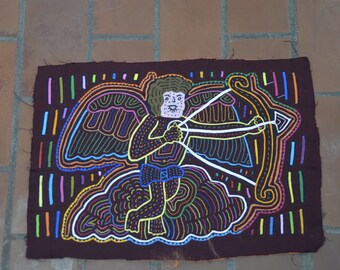




LAS MOLAS TRADICIONALES Y AUTÉNTICAS SON MI COLECCIÓN
TRADITIONAL AND AUTHENTIC MOLAS ARE MY COLLECTION
COLECCIÓN MOLA DE LYNNE SALTZMAN EN ETSY
etsy-fr.life/shop/LynneSaltzman
Nací en Panamá en 1956.
criado en la Zona del Canal de 1956 a 1976
Padre: Jack Saltzman, 1920-2011
Supervisor Principal de la Central Hidroeléctrica Miraflores en las Esclusas de Miraflores del Canal de Panamá. La única persona sin título de ingeniería que alcanzó este nivel de experiencia. Fue un ingeniero autodidacta.
Papá llegó a Panamá en 1952, se casó con Flory en 1953, se retiró en Panamá desde 1980 hasta que falleció.
Mamá: Flory Saltzman 1927-2022
Nacido en Colón, Panamá, criado en Jerusalén, Israel, y luchó en la Guerra de Independencia de Israel de 1948,
Regresó a Panamá en 1948.
Trabajó como joyero en una joyería muy prestigiosa.
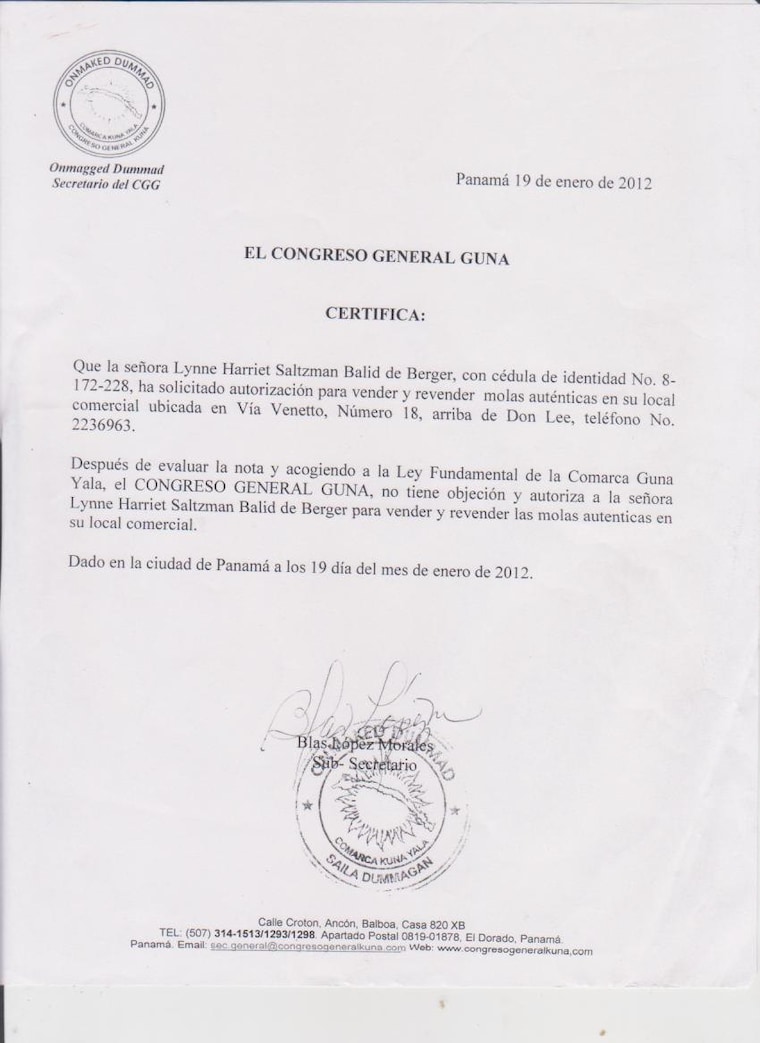
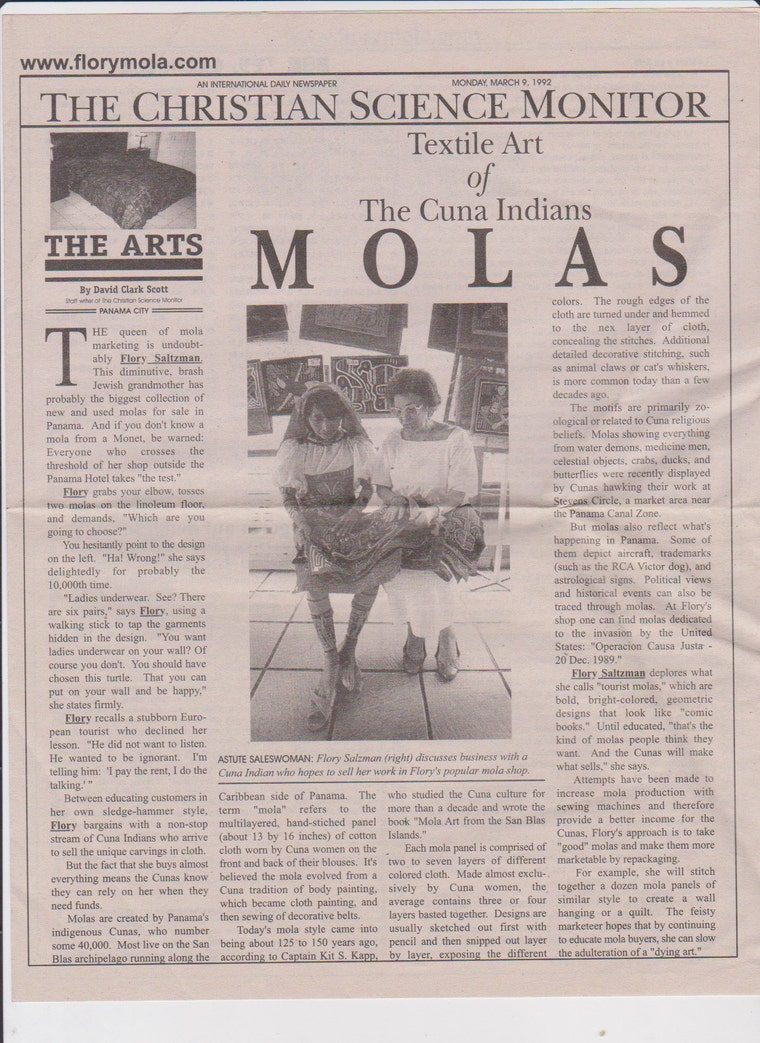
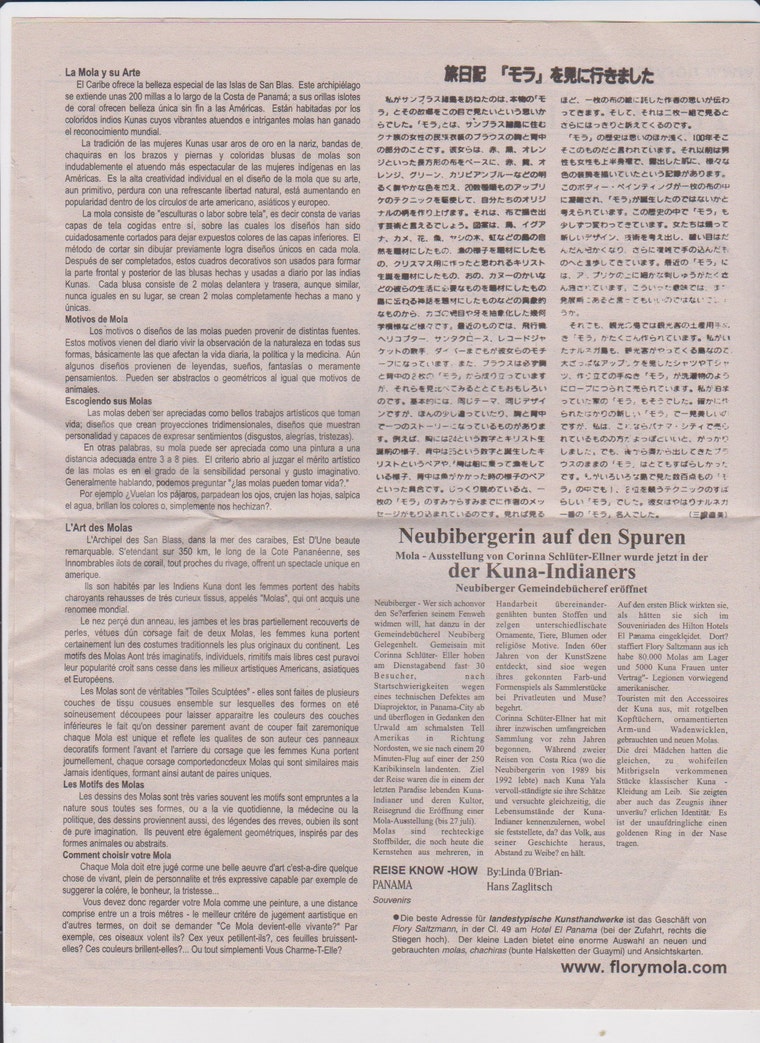
Varios años después, decidió abrir su propia tienda en 1961 después de conocer a un voluntario del Cuerpo de Paz, quien le presentó la hermosa blusa y el mundo de los indígenas Kuna (Guna).
Allí descubrió el arte de las molas.
“ESCULTURA” A TRAVÉS DE LA TELA.
Trabajo en la tienda desde los 10 años. Soy nutricionista y dietista graduada de la Universidad de Minnesota.
Me casé con Tino en 1976 y tengo tres hijos y nueve nietos. Me volví a casar en 2008 con Leslie.
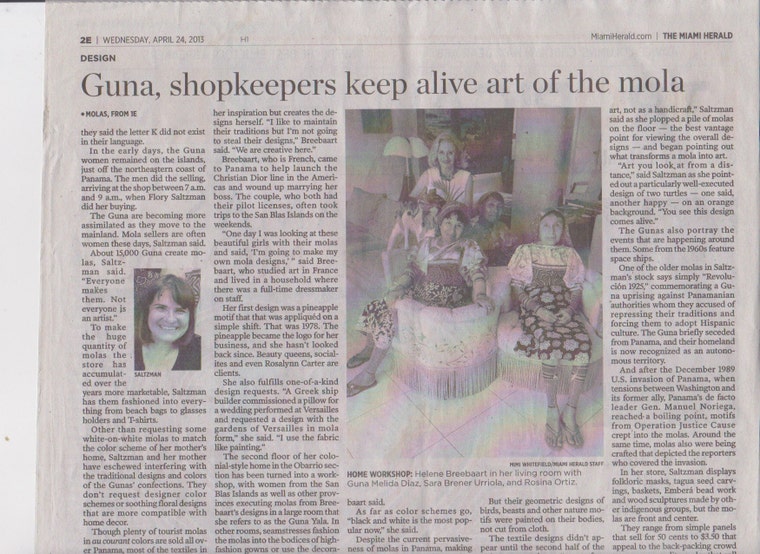
Me hice cargo de la tienda cuando Tino murió de cáncer en 2000, y mi madre sufrió un derrame cerebral importante en 2001.
Recuerdo específicamente estar en la tienda, y después de todo esto, un cliente me retó, diciendo que yo no amaba ni apreciaba las molas tanto como mi mamá y que nunca llevaría esta forma de arte al nivel que merece.
Por duras que fueran estas palabras, era lo que necesitaba para poner todo mi corazón en aprender todo lo que pudiera sobre las molas “vintage, tradicionales” y dedicar mi tienda a estas molas antes de que se perdieran por completo.
En esa época, muchas empresas y diseñadores solicitaban que las molas fueran lo que deseaban: azul sobre azul, con muchos tucanes y aves, para las camisetas y camisas de hombre. Además, los logotipos o diseños de las empresas pueden ser lo que el cliente moderno desee.
PARA MÍ, PRESERVAR LA MOLA VINTAGE ES EL MENSAJE MÁS VALIOSO QUE PUEDO EXPRESARLES.
LAS ISLAS DE SAN BLAS Y LOS INDIOS GUNA:
Hay alrededor de 365 islas ubicadas en el océano Atlántico, entre Panamá y Colombia, cerca de la selva del Darién. Algunas islas se están hundiendo debido al cambio climático, y la reubicación de los indígenas guna está ocurriendo actualmente.
HISTORIA DE MOLA:
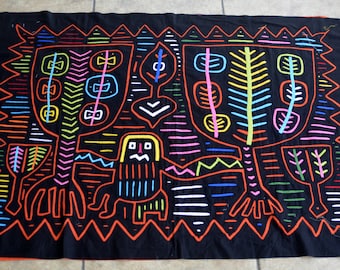
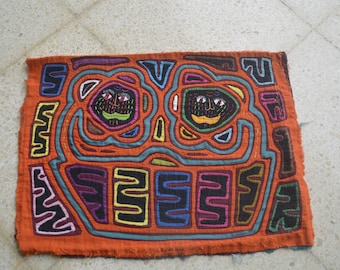
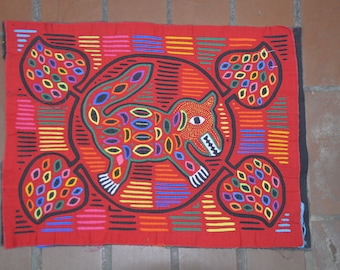
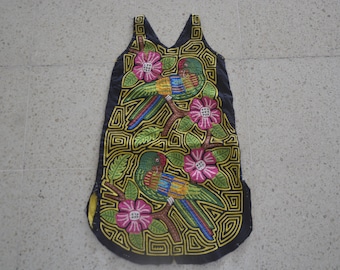
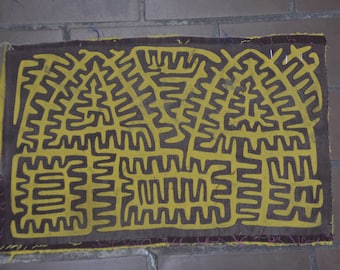
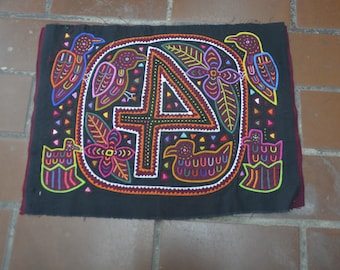
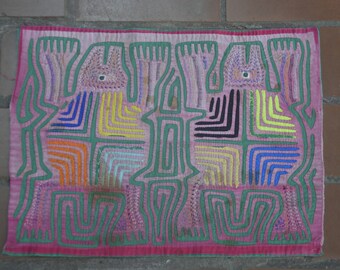
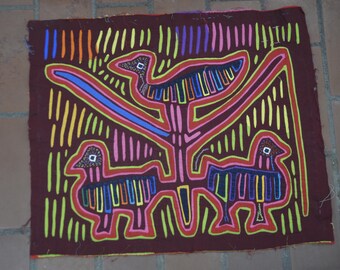
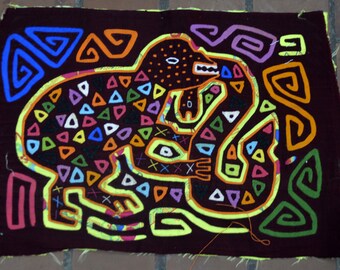
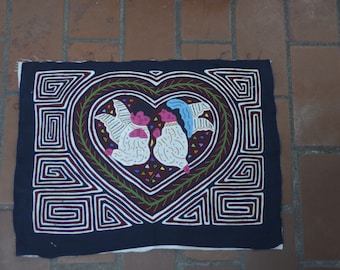
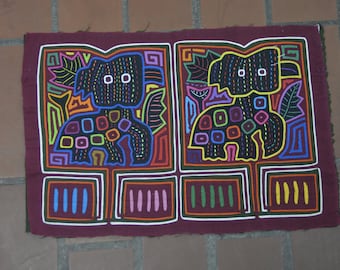
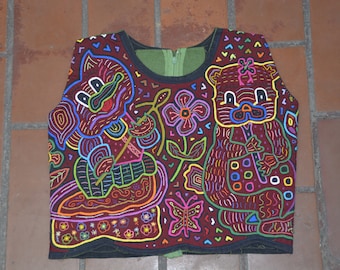
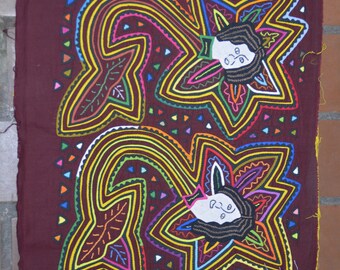
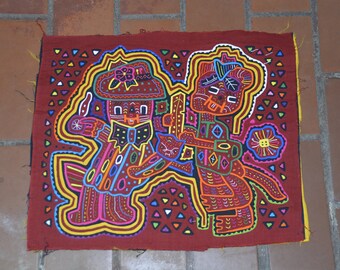
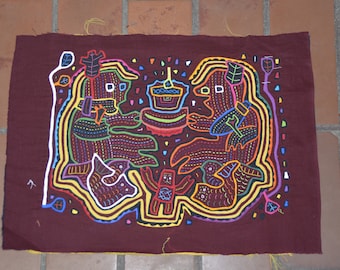
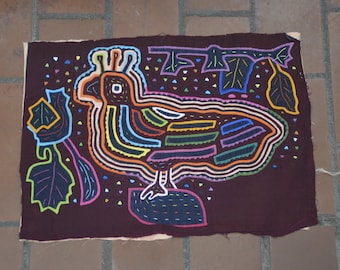
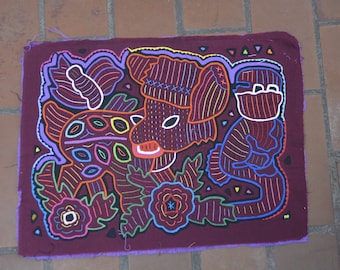
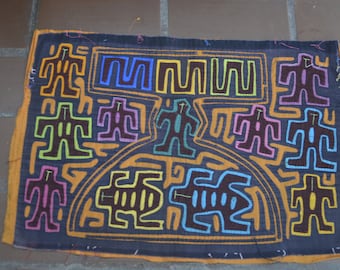
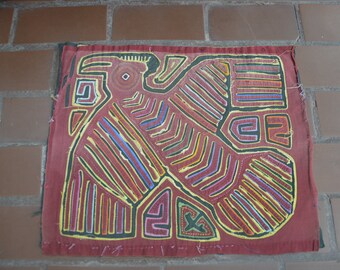
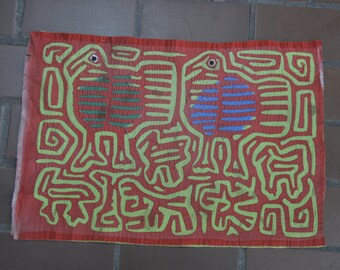
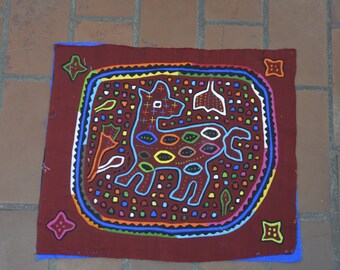
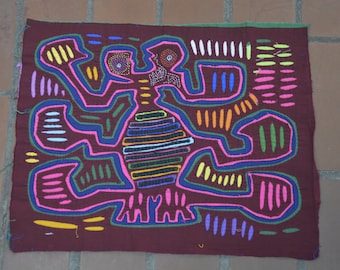
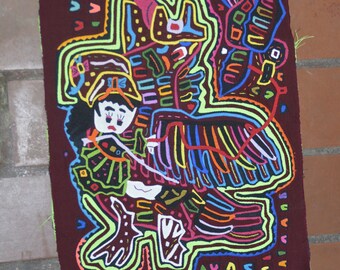
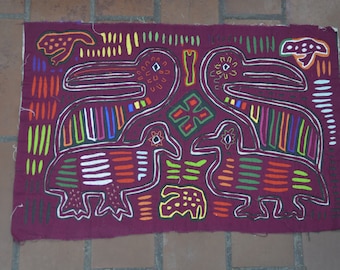
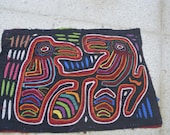
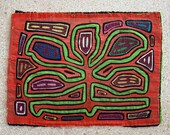
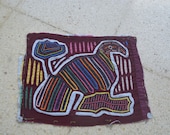
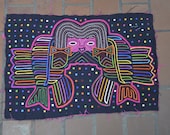
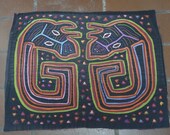
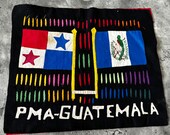
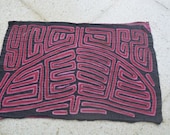
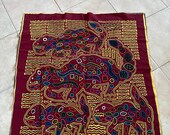
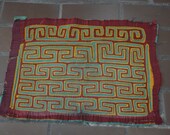
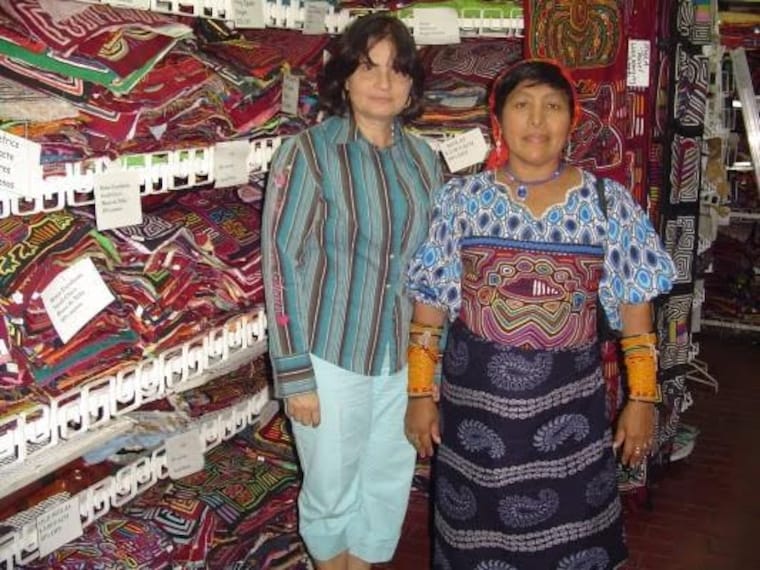
Al principio se creía que las molas eran dibujos sobre el cuerpo de la mujer. Cuando se introdujo la tela, la mujer se hacía molas para su blusa. Molas significa blusa. Como la mujer era más corpulenta y pesada, las molas eran naturalmente más grandes. Tengo muchos dibujos del diseño original de molas pintados sobre plumas. Se dice que existen 144 diseños originales. En su mayoría geométricos, las molas se hacen para explicar leyendas y el entorno. Nunca hay dos iguales; siempre se hacen para la blusa de la mujer indígena Guna; hay dos similares, pero nunca iguales.
CÓMO SE HACE LA MOLA:
• Tome varios trozos de tela, por lo general, la medida es de 11 pulgadas x 14 pulgadas.
• Corta la capa superior para sacar la siguiente capa de tela, dóblala y cósela.
• Cada diseño va surgiendo a medida que se realiza el corte, el plegado y la costura.
En las Molas antiguas, la mayoría de los diseños no eran dibujados. Pero hoy en día veo esto cada vez más.
• Puede tomar de 3 a 6 meses terminar una mola, pero esto se hace en conjunto cuando se construyen otras molas.
CÓMO ELEGIR Y APRECIAR TU MOLA.
1. Coloque la mola a cierta distancia, generalmente de 3 a 5 pies.
2. Observa lo que sucede en la mola. ¿Qué historia se cuenta?
3. Observa los colores que usa la mujer indígena Guna. Observa cómo vuelan los pájaros o cómo la madre cuida a sus crías, etc. Observa la simetría.
4. Recuerda que Panamá es un lugar cálido, por lo que muchas molas son de dos colores. Esto también es sorprendente al observar las molas, ya que el diseño es difícil de encontrar y la costura es muy fina. Muchos lugareños, aunque no sean artistas, te aconsejarán que le des la vuelta a la mola para asegurarte de que tenga de 3 a 4 capas de tela. También es importante revisar la costura para asegurarte de que no esté hecha a máquina. (Para tu información, la máquina de coser fue introducida por el Cuerpo de Paz en la década de 1980, así que estas molas también son vintage).
5. NO ESTOY DE ACUERDO CON ESTO. CREO QUE CADA MOLA TIENE SU BELLEZA, DE TI DEPENDE ENCONTRARLA.
Gracias por escuchar y espero que cada uno de ustedes encuentre esta belleza en su mola especial.
Cuidarse.
Lynne
MOLA COLLECTION BY LYNNE SALTZMAN ON ETSY
https://etsy-fr.life/shop/LynneSaltzman
I was born in Panamá in 1956
raised in Canal Zone From 1956-1976
Father: Jack Saltzman, 1920-2011
Head Supervisor for the Miraflores Hydroelectrical Plant at the Miraflores Locks on the Panama Canal. The only person without an engineering degree who was able to reach this level of expertise. He was a self-taught engineer.
Dad came to Panama in 1952, Married Flory in 1953, retired in Panama from 1980 till he passed away
Mom: Flory Saltzman 1927-2022
Born in Colon, Panama, raised in Jerusalem, Israel, and fought in the Israeli Independence 1948 War,
Returned to Panama In 1948.
Worked as a jeweler for a very prestigious jewelry store.
Several years later, she decided to open up her own store in 1961 after meeting a Peace Corps volunteer, who introduced her to the Kuna (Guna) Indian beautiful blouse and world.
Here, she discovered the art form of the molas.
“SCULPTURING” THRU CLOTH.
I have worked in the store since I was 10 years old. I am a Nutritional and Dietitian who graduated from the University of Minnesota.
I married Tino in 1976 and have 3 children and 9 grandchildren. I married again in 2008 to Leslie.
I took over the store when Tino died of cancer in 2000, and my mom had a major stroke in 2001.
I specifically remember being in the store, and after all this, a customer challenged me, saying that I did not love and appreciate the molas as much as my mom and I would never bring this art form to the level it deserves.
As harsh as these words were, they were what I needed to put my whole heart in learning as much as I could about the ‘vintage, traditional’ molas and dedicate my store to these molas before they were completely lost.
During this time, many companies and designers were requesting that the molas be what they wanted: blue on blue, lots of toucans and birds, for the t-shirts and men’s shirts. Also, Company logos or designs can be whatever the modern client wants.
FOR ME, PRESERVING THE VINTAGE MOLA IS THE MOST VALUABLE MESSAGE I CAN EXPRESS TO YOU.
SAN BLAS ISLANDS AND THE GUNA INDIANS:
There are around 365 islands located in the Atlantic Ocean between Panama and Colombia, near the Darien jungle. Some of the islands are sinking due to climate change, and relocation of the Guna Indian is happening right now.
MOLA HISTORY:
Molas were first thought to be drawings on the body of the woman. When cloth was introduced, the woman would make her molas for herself for her blouse. Molas means blouse. As the woman was larger and heavier, the molas were naturally larger. I have many drawings of the original design of molas painted on top of feathers. It is said to be that there are 144 original designs. Mostly geometric, but the molas are done to explain legends, environment of their surroundings. There are never 2 alike, always done for the Guna Indian woman’s blouse, there are 2 similar but never alike.
HOW MOLA IS MADE:
• Take several pieces of cloth, usually, the measurement is 11 inches x 14 inches
• Cut through the top layer to bring out the next layer of cloth, fold, and sew.
• Each design comes through as the cutting, folding, and sewing occur.
• In the vintage Molas, the majority of the designs were not drawn. But nowadays I see this more and more.
• It can take from 3-6 months to finish a mola, but this is done together when constructing other molas.
HOW TO CHOOSE AND APPRECIATE YOUR MOLA.
1. Put the mola at a distance, usually 3-5 feet
2. Observe what is going on in the mola. What story is being told?
3. See the colors that the Guna Indian woman uses. See how the birds fly or how the mom takes care of her young, etc. Observe the symmetry.
4. Remember that Panama is hot, so many of the molas are 2 colors. This is also amazing when looking at molas because the design is hard to find and the stitching is so fine. Many local people, not artists, will tell you to turn the mola upside down to make sure there are 3-4 layers of cloth. Also, to check the stitching to make sure it is not done by machine. (FYI, the sewing-machine was introduced by the Peace Corp in 1980’s so these molas are also vintage).
5. I DO NOT AGREE WITH THIS. I BELIEVE EACH MOLA HAS ITS BEAUTY, IT IS UP TO YOU TO FIND ITS BEAUTY.
Thank you for listening, and I hope each of you finds this beauty in your special mola.
Take Care.
LYNNE
